
Choosing Sunset Jewelry for Autumn Weddings: A Seasonal Color Guide
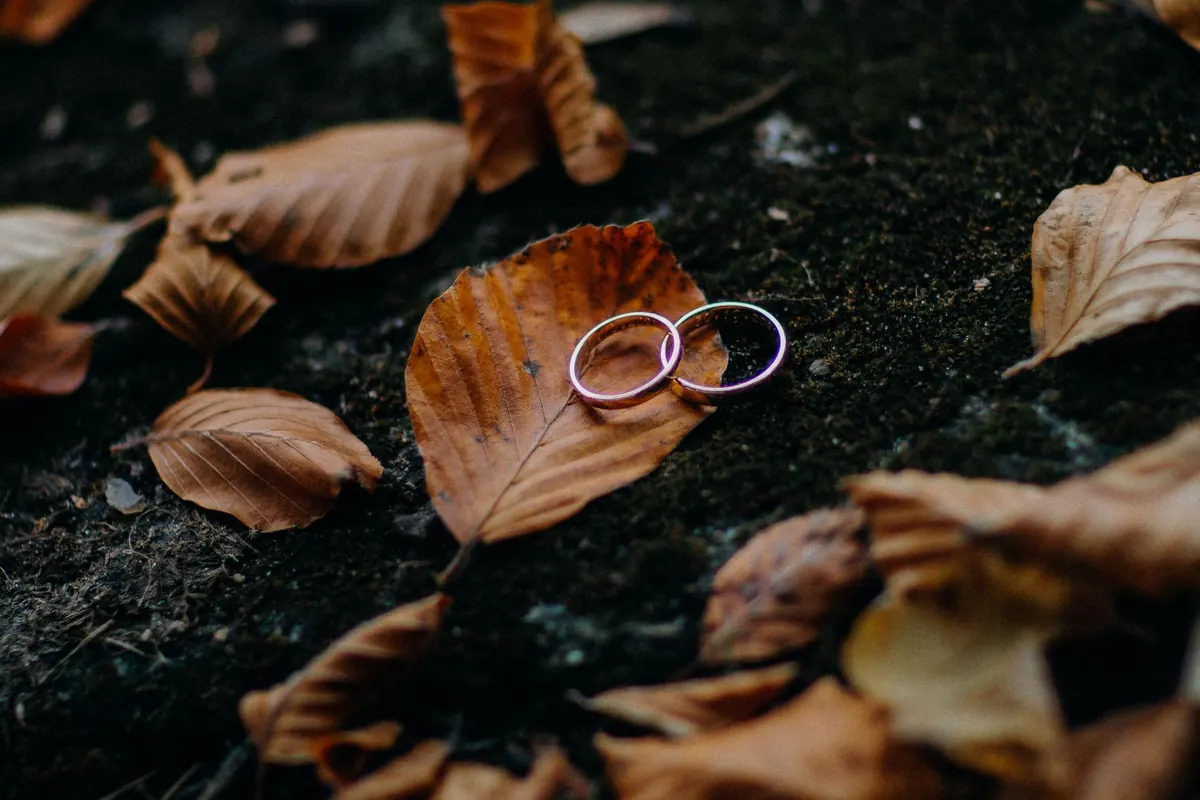
Autumn weddings have a light problem, and it is the good kind. Between four and six in the afternoon the sun drops low, the air turns gold, and every color in the room shifts a few degrees warmer. Jewelry chosen under a shop's white LEDs can look entirely different in that light — sometimes far better, sometimes strangely flat. That is why sunset jewelry is not only a color story. It is a decision about timing, fabric, and the way a stone behaves when light comes at it sideways. This guide works through the choices in the order that actually matters: light first, palette second, fabric third, and photography before you commit.
Start With the Light, Not the Stone
Most autumn ceremonies are timed to finish in the last hour before sunset, which means the photographs you will live with for decades are made in low, warm, directional light. Under that light, very cool stones lose their advantage. A colorless white sapphire or a pale aquamarine that looked crisp and clean in a display case can read gray or slightly dull against a warm background. Stones with body color and saturation — citrine, carnelian, garnet, honey topaz — do the opposite. They gather the warmth around them and seem to glow from inside.
Skin behaves the same way. Golden light flatters most complexions, and warm metals and warm stones continue that conversation rather than interrupting it. If you have ever tried on a piece in a store and then been disappointed in an outdoor photo, you have already met this problem.
Three Warm Families That Read as Sunset
A sunset palette is not just orange. It runs from pale honey at the horizon up through apricot and rose, then ember, and finally the deep plum and olive of the sky above. Treat the stones the same way: choose one family as the dominant note, one as an accent, and let a third enter only through the metal or a single small piece.
- Honey and amber: citrine, sunstone, honey topaz, carnelian, amber. The safest starting point for a September or early October wedding.
- Blush and peach: morganite, peach sapphire, pale pink topaz, freshwater pearls with a warm cast. Beautiful in late afternoon, but check them in your photographs — very pale stones can wash out.
- Ember and red: spessartine and rhodolite garnet, hessonite, fire opal, deep pink tourmaline. Rich, confident, and especially good with velvet or heavy silk.
- Anchor shades: dark amethyst, plum garnet, olive-green tourmaline, smoky quartz. These keep a warm palette from turning sugary.
If you are the bride, the necklace and earrings carry the palette; a bracelet and a small ring can echo it. If you are a guest, one ember piece against a neutral dress is often more striking than a matched set.
Read the Fabric Before You Choose the Stone
The dress decides how much jewelry the eye can absorb. Silk satin and duchess satin are reflective surfaces — they throw light back upward and can compete with a high-sparkle halo setting. Softer, calmer settings, brushed gold or a bezel, usually sit better against them. Matte crepe absorbs light, so it can carry more sparkle and more saturation than you would expect.
Velvet eats light entirely. A stone against velvet needs internal glow and a certain scale, otherwise it disappears in the photographs. Lace and beaded bodices create their own texture, so keep the shapes of your jewelry simple and let the material do the talking. Tulle and organza pass light through, which makes dangling drop earrings and open settings especially rewarding.
Before you buy anything, ask the jeweler for a fabric swatch or bring a 10cm offcut of your dress material. Hold the stone against it near a window at five in the afternoon, not under a ceiling light. This single step prevents most regrets.
Metals and Settings: Where Warmth Is Won or Lost
Yellow gold is the most forgiving choice for a sunset palette, and antique or lightly brushed gold finishes photograph better than mirror polish, which creates hot spots. Rose gold is lovely with carnelian, garnet and amber, but it can flatten the contrast with pale morganite or peach sapphire, so look at the pairing rather than assuming it works. White metal is not forbidden; it simply becomes a deliberate contrast, cooler and more graphic. In golden-hour light, silver and white gold will pick up warm reflections anyway.
Settings matter as much as the stone. Bezels feel calmer and suit velvet and matte fabrics. Prongs release more light and sparkle. A halo brightens a small stone but can overwhelm a large one, and it tends to look busier in close-up photography. Closed-back settings bounce warmth from the skin back through the stone, a small detail that often makes an amber or citrine piece look richer.
Golden-Hour Photography: What the Camera Does to Warm Stones
Cameras add warm light to warm color, and the result can be a flat, syrup-orange stone with no detail. Very pale stones fail in the opposite direction, bleaching into the dress. Stones with depth — a garnet with a dark core, a smoky quartz with rose undertones, a tourmaline that shifts from pink to plum — hold their shape and shading.
Test before you commit. Photograph the candidate stone on your phone at around half an hour before sunset, next to your fabric swatch, then look at the photo rather than the stone. Ask your photographer whether they plan to use fill flash at the reception. Flash is cool and neutral, so a piece chosen purely for sunset may look different after dark; a small switch for the evening, or a design that holds up under both, solves it.
If a stone looks good on your hand but dull on your screen at six in the evening, believe the screen.
Dressing the Wedding Party Without Looking Matched
Bridesmaids in different dress styles look more considered when the jewelry is unified by metal and stone family, not by identical pieces. Give each person the same gold and a garnet or citrine in a shape that suits her neckline. Grooms and groomsmen have more room than they think: cufflinks or a lapel pin in carnelian or sunstone read as warm without being loud. Mothers and grandmothers often carry the anchor shades best, a deep plum or olive stone that grounds the group in photographs.
For an outdoor ceremony, think about wind and movement. Secure backs on earrings, shorter drops for the ceremony itself, and a clasp you can check without help. A long pendant against a high neckline tangles; a shorter chain against a strapless bodice leaves a gap.
A Short Checklist Before You Commit
- Bring a fabric swatch and compare at least three stones side by side in late-afternoon daylight.
- Photograph the finalists next to the fabric and judge the images, not the tray.
- Check the stone against your skin, not the display pad — warm stones change character on a hand.
- Ask how the piece is set and whether it suits the fabric weight and the neckline.
- Confirm the evening plan: will it hold under flash and indoor lighting?
- Buy or commission early enough for resizing, engraving or a stone swap if something feels off.
Autumn light is generous, but it is also specific. Choose stones that carry their own warmth, keep the setting calm enough for the fabric, and test everything at the hour you will actually be photographed. The result is jewelry that looks intentional in every frame, from the ceremony to the last dance.
Photo: Rene Terp / Pexels